Interest education · 24 ac. h. · from age 16
The skill of a balanced life: 6 steps to knowing yourself and finding your direction
24 academic hours · in person or online · groups of up to 12
A practical programme for young people aged 16+ and adults on self-knowledge, communication, self-organisation and career direction. No esotericism — structured tasks, analysing real situations, work in groups and reflection. Each module is a complete unit with one concrete next step.
- 6modules × 4 ac. h.
- 75%practice · a workbook
- 16+young people and adults
- Format
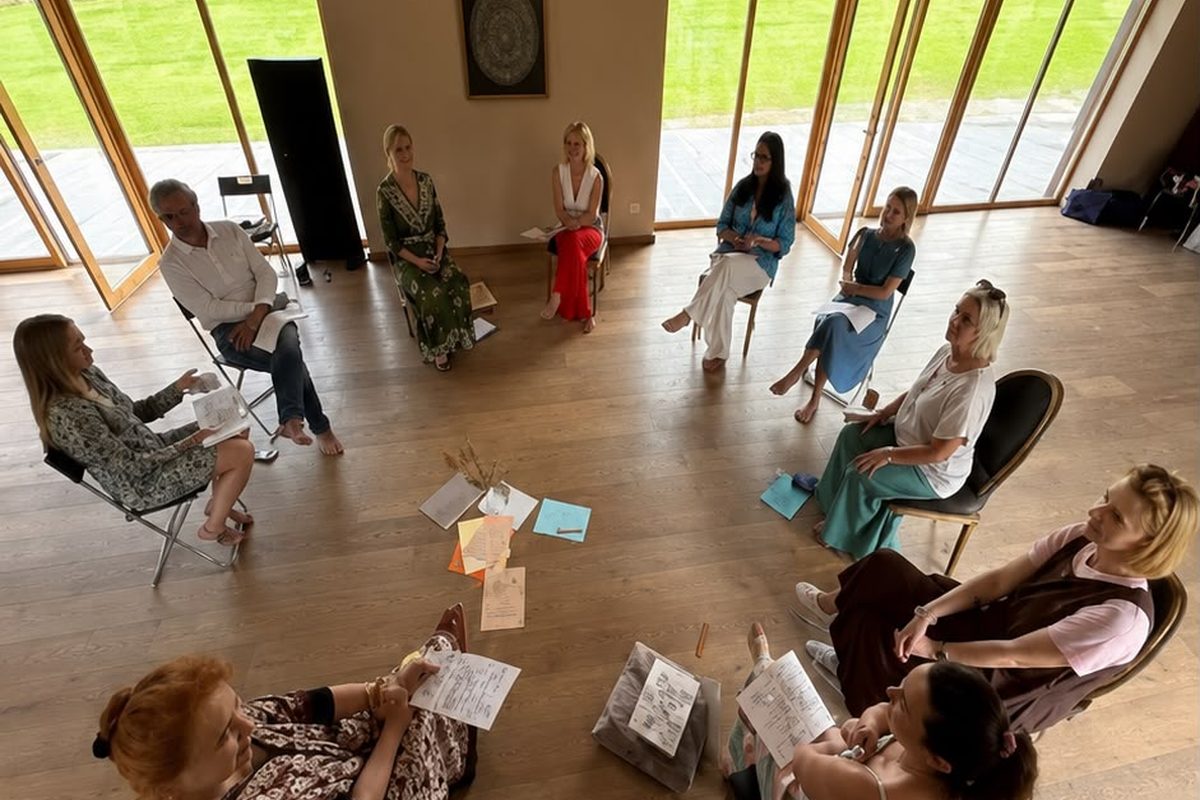
- In person or onlinegroups of up to 12 participants
- Length
- 24 academic hours6 modules × 4 ac. h.
- For whom
- From age 16young people, parents, adults
- Language
- Latvian / Russian / Englishmaterials in LV/RU
- Programme
- Interest / career educationready for official submission · to VISC requirements
Who it is for
- Young people aged 16–19: getting to know yourself — your strengths, interests and values.
- Young people aged 16–19: choosing what to study — a direction in education, and the first steps into a profession.
- Young people aged 16–19: presenting yourself for applications, projects and interviews; motivation to study and planning without pressure.
- Adults 20+: restoring the balance between work, study and relationships.
- Adults 20+: communication and boundaries in the family and at work.
- Adults 20+: managing your time and resources, and preventing burnout.
Outcomes
- You will rate your satisfaction in 6 areas of life on a scale of 0–10.
- You will put together a 30-second introduction of yourself and a pitch for an idea.
- You will plan a week around 3 priorities and micro-steps.
- You will use empathetic listening and the NVC formula.
- You will learn to notice the early signs of burnout and to plan your recovery.
Programme · 6 modules — 24 academic hours
Each module is a complete unit: an introduction, structured practical tasks with visual materials, work in pairs and groups, reflection and one concrete next step. Open a module to see its content and its practical tasks.
01Knowing yourself and finding your career directionself-analysis · making decisions · planning a career · critical thinking4 ac. h.
Self-analysis: values, interests, strengths. The criteria for choosing an education and a career direction. Models for making decisions. Separating your own goals from what those around you expect.
- A structured self-assessment: interests / skills / values — a table and the connections between them.
- A career-direction task: 3 real directions, their pros and cons, and the next step for looking into them.
- Prioritising values: 10 values → your top 3 and what they mean for choosing study and a career.
02Self-discipline and building habitsself-organisation · planning · self-motivation · responsibility4 ac. h.
Types of motivation. Setting goals with SMART. How habits are formed. The causes of procrastination and strategies for overcoming it. Self-regulation.
- A micro-habit formula: when — where — what I do for 10 minutes. With an example for studying.
- A weekly planning sheet: 3 priorities a day (study / rest / what matters).
- Analysing situations: what gets in the way of doing it, and what the minimum 1% step is.
03Presenting yourself, and communicationcommunication · presenting yourself · cooperation · speaking with confidence4 ac. h.
The structure of an introduction of yourself. Verbal and non-verbal communication. The basics of public speaking. Giving and receiving feedback. The barriers to communication.
- A 30-second introduction of yourself: “I am / I am interested in / I want” — practised in pairs.
- The structure of a pitch for an idea: problem — solution — benefit — next step.
- A feedback exercise: fact — effect — recommendation.
04Talking and working together in relationshipsconversation · cooperation · emotional intelligence · resolving conflict4 ac. h.
Empathetic listening. The basics of nonviolent communication. Setting boundaries. Strategies for resolving conflict. Roles and the sharing of responsibility when working together.
- The NVC formula: “I feel / When this happens / What matters to me is / I am asking for” — in writing and in pairs.
- Ways of putting boundaries into words: how to say no while keeping the contact — 3 ready-made phrases.
- Mapping a conflict: my own 10% of it, and what I can change tomorrow.
05Personal effectivenessmanaging your time · setting priorities · solving problems · cooperation4 ac. h.
Managing your time and your attention. Setting priorities (Pareto 80/20, Eisenhower). An audit of your resources. Asking for help and delegating. Assessing results.
- An attention audit: what gives you time and focus and what takes them away — removing one distraction.
- A priority matrix: 3 priorities for the day, chosen by “what will give 80% of the result?”.
- A map of your support: who I can ask, and what for — in study, at work and in the family.
06Physical and emotional wellbeingtaking care of yourself · emotional resilience · self-regulation · a healthy way of living4 ac. h.
The signs of stress, and preventing it. The basics of emotional self-regulation. The balance between work and rest. Healthy habits. Taking care of yourself without going to extremes.
- A list of your resources: what helps you recover — sleep, movement, rest, contact.
- A weekly balance plan: study/work — rest — movement — relationships.
- Recognising the early signs of stress, and 3 steps to prevent it.
6 meetings × 4 academic hours = 24 hours. 75% practice. The materials are a workbook of tasks.
Themes of this course
Frequently asked questions about the course
Do I need any preparation?
No, no prior knowledge is needed. The sessions are interactive — a short introduction to the theory and then practice: worksheets, structured tasks with visual materials, analysing situations from study, work and family life, work in pairs and groups, reflection and feedback.
Is this esotericism?
No. No esotericism — structured tasks, analysing real situations, work in groups and reflection. The programme uses only educational terms: self-analysis, communication, cooperation, emotional intelligence, soft skills, career direction.
How do the sessions run?
In person or online, in a group of up to 12 participants. 6 meetings × 4 academic hours — 24 academic hours in total, 75% of it practice. Each module is a complete unit: an introduction, practical tasks, work in pairs and groups, reflection and one concrete next step.
Is this an official educational programme?
The programme has been written as an interest-education / career-education programme for young people and adults, ready for official submission under the requirements of VISC, Latvia’s National Centre for Education — with its intended outcomes set out in the Knowledge / Skills / Competences model. Assessment is formative, with no exam: a self-assessment of 0–10 across the six areas at the start and at the end, and a reflection diary after every module. The programme counts as completed if the participant has attended at least 75% of the sessions and handed in the reflection sheets.
What do I get at the end?
A workbook with the tasks of all 6 modules and the self-assessment sheets; for young people aged 16–19, an individual career-direction plan; practical tools for planning, communication and recovery; and a certificate of completion of a 24 academic hour programme (interest education, 16+).
In which language, and from what age?
In Latvian, Russian or English; the materials are in LV/RU. Open to participants from age 16: young people, parents and adults.
Start with a self-assessment across 6 areas.
The programme begins with a self-assessment across six areas of life and ends with practical tools for planning, communication and recovery. We agree on the format — in person or online — in the conversation.