
Practical course · communication · public speaking
Speak convincingly: Rhetorical Poker
24 academic hours · in person, in a group
The skill of speaking on the spot and building an argument — a training game for communication. No more than 30 seconds to prepare, then the speech, learning points from the group and feedback from the facilitator. No esotericism and no gambling: the chips are learning points, not stakes.
- 30seconds to prepare — no more
- 24ac. h. · 6 modules × 4
- 16+young people and adults
- Format
- In personin a group, working at a table
- Length
- 24 academic hours6 modules × 4 ac. h.
- For whom
- From age 16young people and adults
- Language
- LV / RU / ENwhichever the group chooses
- Type
- Practical coursethe “Rhetorical Poker” methodology
Aims of the programme
- To practise speaking without preparing in advance.
- To teach you to see your strengths and your areas for growth.
- To speak while holding on to your purpose and your structure.
- To give and receive developmental feedback.
- To master rhetorical techniques for holding attention.
- To bring the skills together in a mini tournament.
Outcomes
- Knowledge: models for structuring a spontaneous speech (claim — argument — example — conclusion), types of argument and the errors of critical thinking, the mechanisms for holding an audience’s attention.
- Skills: building a convincing speech in 30 seconds and speaking in public without stress; applying emotional intelligence and cooperation in a group; giving feedback on structure.
- Competences: communicating in different contexts and adapting to the person in front of you; preparing a speech independently and assessing your own work.
Programme · 6 modules — the 6 categories on the board plus improvisation
The aim of the programme is to develop communicative competence, the skill of speaking in public on the spot, building an argument and holding an audience’s attention, for young people aged 16+ and adults, in the safe, structured setting of a training game. Thematic plan: 24 academic hours, 6 modules of 4 hours. Open a module to see its content and its practical tasks.
01Once upon a life — storytellingHero — goal — obstacle — choice. How to begin and end without preparing.4 ac. h.
The structure of a story: hero — goal — obstacle — choice. The purpose of a speech and its composition. How to begin and end without preparing. Skills developed: communication, public speaking, emotional intelligence.
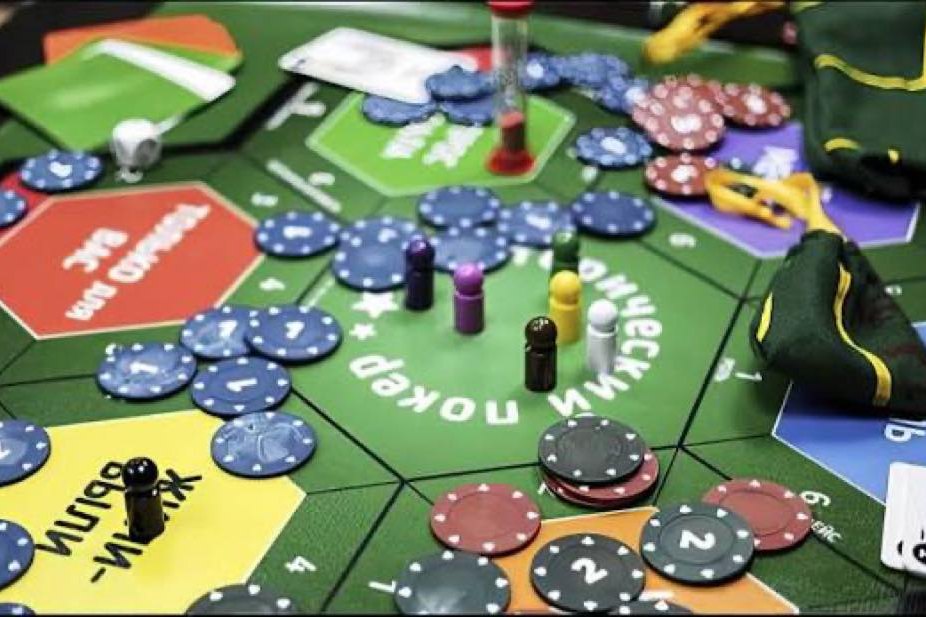
- You roll the dice → you land on a blue “Once upon a life” square → you draw a card with the opening of a story.
- A 60–90 second speech, with no more than 30 seconds to prepare.
- The group awards learning points for structure and emotion; the facilitator gives feedback on communication.
02Convince me — building an argumentClaim — argument — proof. The triangle of persuasion: logos, ethos, pathos.4 ac. h.
Claim — argument — proof. Logical fallacies, critical thinking. The triangle of persuasion: logos — ethos — pathos. Skills developed: argumentation, critical thinking, public speaking.
- The yellow category on the board, with a set of cards carrying statements.
- A 60-second “convince me” speech, with questions from the opponents.
- Assessment: the clarity of the argument = learning points.
03A pig in a poke — the unexpected topicWorking with the unknown: the topic is revealed only once the card is turned.4 ac. h.
Working with the unknown. The 30-second principle. Improvisation techniques — “Yes, and…”, association, reframing. How not to freeze. Skills developed: improvisation, emotional intelligence, cooperation.
- The secret category: the topic is revealed only once the card has been turned over.
- A speech with no pauses — practising “speak while you think”.
- Self-assessment plus support from the group.
04Playing a role — communicating in roleA manager, a client, a teenager, an expert — how the language, the pace and the arguments change.4 ac. h.
Adapting to the person in front of you. Status, roles, interests. How to change your language, your pace and your arguments depending on the role. Skills developed: cooperation, communication, emotional intelligence.
- The purple category: you draw a role card (a manager, a client, a teenager, an expert).
- A dialogue or a short speech in role.
- Feedback: was the role believable? Did the communication reach its goal?
05For you only — working with an audienceA pause, a question, a story, a visual anchor — contact with the room.4 ac. h.
Holding attention: a pause, a question, a story, a visual anchor. Contact with the audience, responding to the room. Skills developed: public speaking, communication, cooperation.
- The red category: tasks that involve the audience.
- A speech plus one technique for holding attention.
- The group acts as the audience and awards points for contact; the facilitator goes through the rhetorical techniques.
06The final — integration and a tournamentA tournament round across all the categories, with two speeches each.4 ac. h.
Bringing together all 5 (+1) categories. A culture of feedback: how to give and receive it in a way that develops people. Self-assessment: strengths and areas for growth. Skills developed: every competence — communication, argumentation, critical thinking, emotional intelligence, cooperation.
- A tournament round across all the categories, with 2 speeches each.
- A video review if you wish (with consent).
- A final confirmation of participation plus individual recommendations on communication.
All the materials are neutral, with no esotericism, and suit young people aged 16+ as well as adults.
Themes of this course
Method: the training game “Rhetorical Poker” — developed jointly by the company “neIgra” (Kazan) and Larisa Zorina, Laboratory of Public Speech (Moscow). Winner of the “Best Idea” award at the First Congress of Game Practitioners, 2019.
Frequently asked questions about the course
Does “Poker” in the name mean gambling?
No. The sessions use no elements of gambling, no stakes and no money. “Poker” in the name refers only to the game format, with cards and points as learning feedback. No esotericism and no gambling: the chips are learning points, not stakes. Every task is about communication and learning.
Is a confirmation of participation issued?
This is a practical course of 24 academic hours, based on the official “Rhetorical Poker” methodology: a communication trainer, not a game of chance. At the end you receive a confirmation of participation (24 h) and individual recommendations on communication. Attendance of 80% is required.
What is the 30-second principle?
The principle of spontaneity: you have no more than 30 seconds to prepare a speech. You roll the dice, draw a card and speak for 60–90 seconds. After the speech come points from the other participants and feedback from the facilitator. That is how you practise speaking without preparing in advance, public speaking and improvisation.
How do the sessions run?
In person, in a group — working at a table. The mechanics: dice, cards, learning points and a board with squares in five colour categories. 6 modules of 4 academic hours, 24 in total. Interactive sessions, work in groups, changing roles, feedback on structure; a video review if you wish, with consent.
How is the work assessed?
Formatively: after every speech, points from the group and a comment from the facilitator on communication and structure. Summatively at the end: 2 integrated speeches and a self-assessment. The criteria: purpose, structure, argument, contact.
From what age, and in which language?
For young people from age 16 and for adults. The language is Latvian, Russian or English. All the materials are neutral, with no esotericism, and easy to explain to parents.
Speak convincingly — without preparing.
Training where every speech begins after 30 seconds and ends with feedback. In person, in a group, with a confirmation of participation at the end. We agree on the group and the timing at the free introductory conversation.